
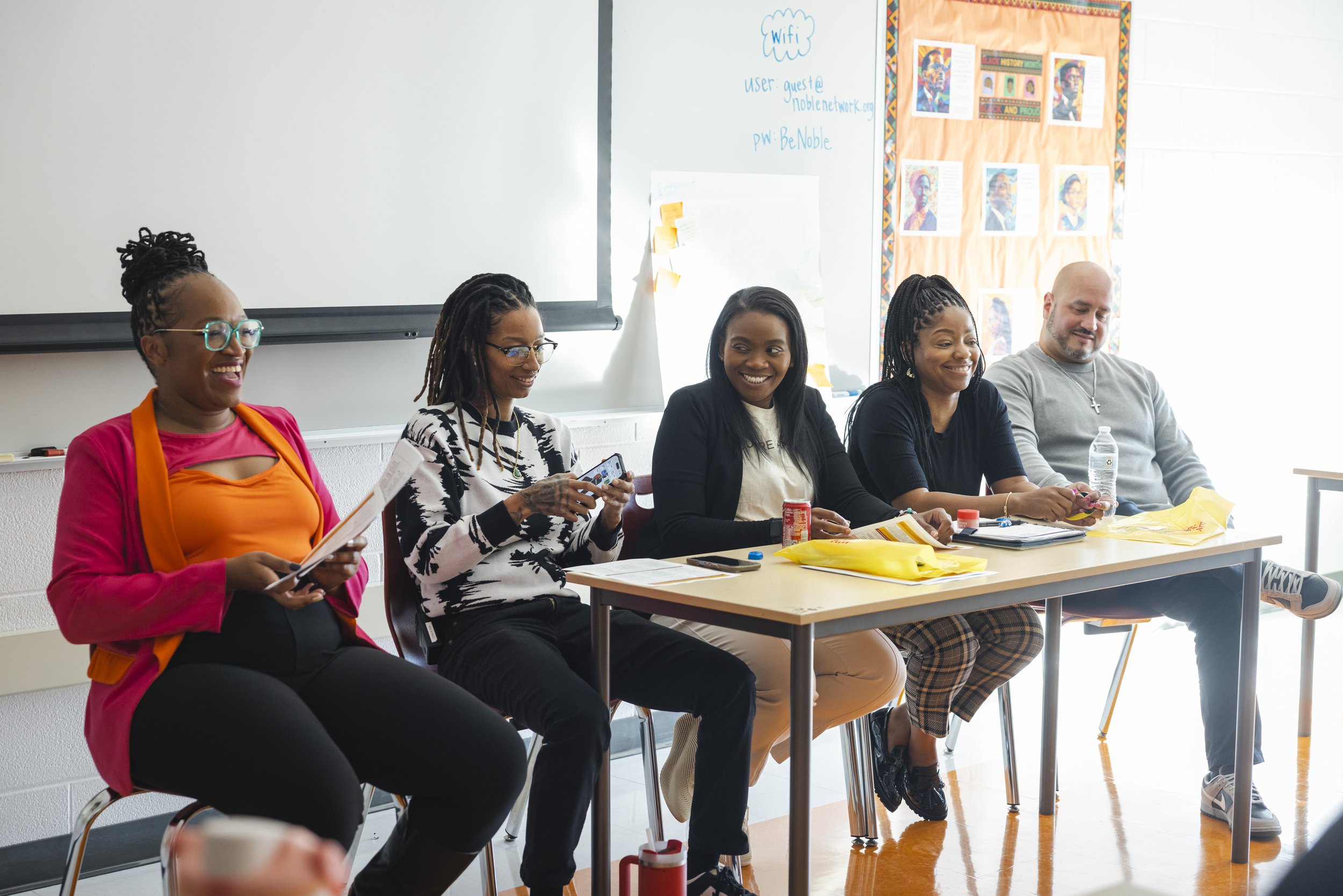
What makes a school worth learning from? It isn’t perfection. And it isn’t a single program, strategy, or initiative that can simply be picked up and replicated somewhere else. On November 17, 2026, a group of Teach For America Greater Chicago–Northwest Indiana alumni spent a day at The Noble Academy exploring and understanding how schools improve when leaders create the conditions for people to thrive.
The visit was part of Schools to Learn From, a leadership development experience that brings together current and aspiring school leaders to learn directly from alumni-led schools across our region. Rather than a traditional school tour, Schools to Learn From gives educators a chance to examine leadership practices in context, build relationships with peers, and consider what they might adapt in their own schools and communities.
At The Noble Academy, participants moved between a student-led tour, classroom observations, conversations with the school’s leadership team, a Genius Hour experience, and a staff panel focused on academics and culture. Across those different experiences, one idea kept resurfacing: School improvement is fundamentally people work.
Leadership is about influence, not position
Early in the day, Noble Academy Principal TFA Alumni School Leader of the Year Tierionna Pinkston offered a deceptively simple definition of leadership:
“Leadership is about influence. It’s not about your position.”
That idea shaped much of what participants would see throughout the day. Leadership at The Noble Academy wasn’t presented as the work of a single person with all the answers. Instead, participants heard about an approach rooted in building trust, creating ownership, and helping people move toward a shared vision. That matters because some of the most persistent challenges in schools cannot be solved through authority alone. Culture cannot simply be mandated. Neither can trust, belonging, or investment in a shared vision. They have to be built.
The adult experience shapes the student experience
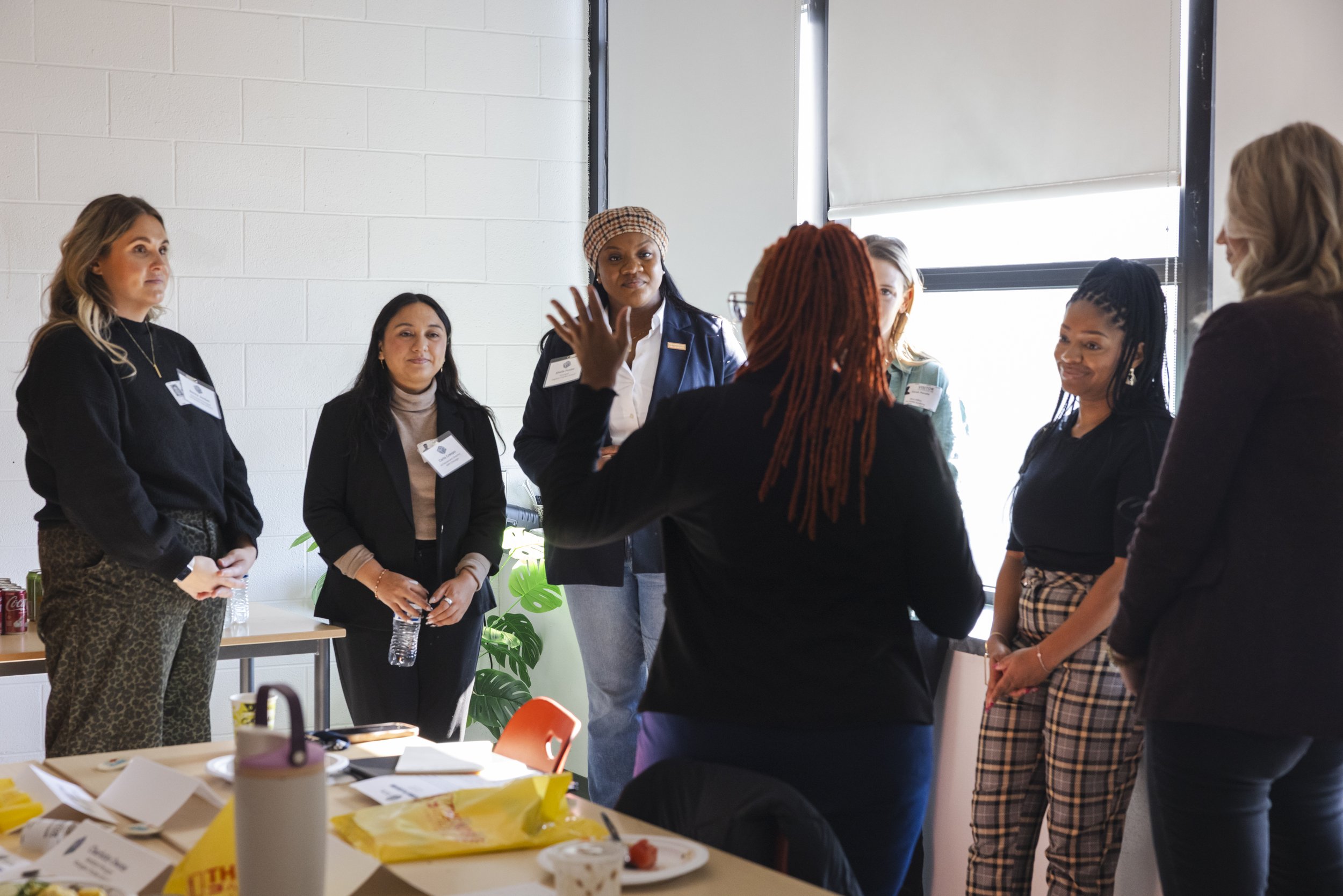
One of the strongest threads throughout the visit was the connection between adult culture and student culture. The premise is straightforward: how leaders treat adults shapes how adults treat students. When educators feel trusted, valued, and humanized, they are better positioned to create those same conditions for young people. In that sense, investing in adult culture is not separate from improving outcomes for students. It is part of the work.
The Noble Academy team also challenged the idea that a people-centered culture requires lowering expectations. Instead, participants heard a consistent “both-and” philosophy: high expectations and deep care. Accountability and belonging. Ownership and empathy. It is an important distinction at a time when conversations about school culture can be reduced to a choice between holding people accountable and supporting them. The lesson from The Noble Academy was that strong school communities do both.
The knowledge and capacity are already in the room
One of the clearest examples of this leadership philosophy came through The Noble Academy’s Genius Hour process. The premise behind the work is powerful: the people closest to a challenge often have valuable insight into how to solve it. Rather than assuming school leaders must generate every answer, The Noble Academy creates opportunities for staff expertise to surface and influence decision-making.
As one idea from the day put it:
“The knowledge and capacity are already in the room.”
For school leaders, that can require a shift in mindset. Leadership becomes less about being the person who solves every problem and more about building structures where people can solve problems together. That approach creates something difficult to generate through directives alone: ownership. People support what they help create.
A vision should be something you can see
Over the course of the visit, participants didn't only hear The Noble Academy’s leadership philosophy. They had opportunities to see how it showed up throughout the school.
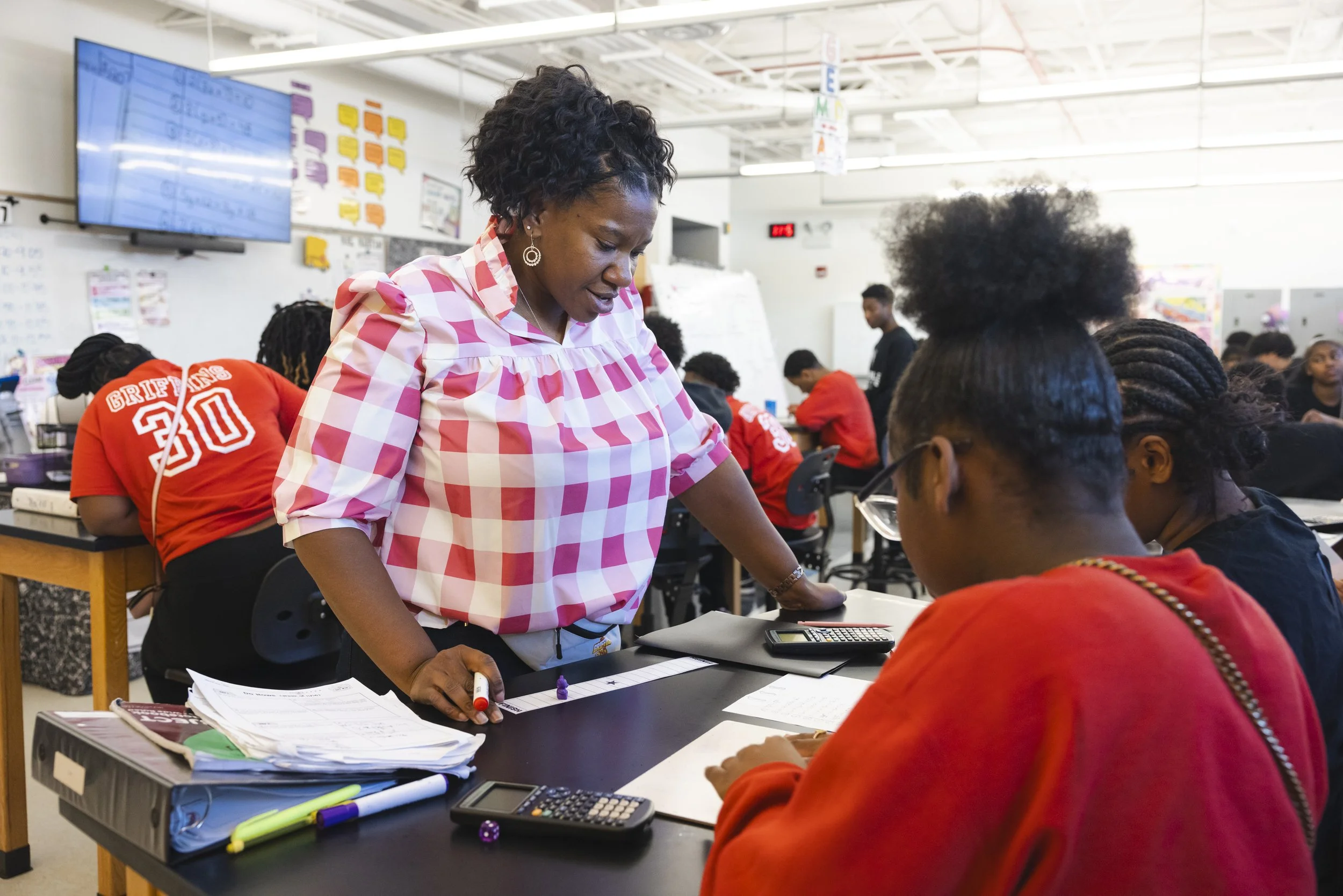
Students led visitors through the building. Participants stepped into classrooms. They heard directly from staff about academics and culture. They listened as the leadership team talked candidly about what was working and where they were still learning. One participant captured the lesson in four words: “Vision is not an aspiration.”
A school’s vision becomes meaningful when people can see evidence of it in everyday decisions and experiences: in classrooms, relationships, staff culture, expectations, and opportunities for people to lead.
That alignment between what an organization says and what people actually experience is what turns vision into culture.
Schools to learn from, not schools to copy

There was another important lesson embedded in the day. The Noble Academy did not present itself as a finished product. Tierionna and her team were open about challenges, lessons learned, and practices they are still refining. Participants weren't being shown a model to duplicate. They were being invited into the ongoing work of a school committed to getting better. That spirit is central to Schools to Learn From. The experience is built around three ideas: Learn, Network, and Change. Participants deepen their knowledge and skills, build relationships with other educators, and consider how what they experienced might lead to change within their own contexts.
There is no perfect school, and there is no single blueprint for school improvement. What works in one community cannot simply be transplanted into another. But educators can learn from one another. They can ask better questions. They can examine the choices behind another school’s culture and systems. They can borrow an idea and adapt it. They can build relationships with leaders wrestling with similar challenges. And sometimes, stepping into another school helps leaders see their own more clearly.
That may be the most important lesson from The Noble Academy: the work of improving schools begins with people. With leaders who listen, adults who feel trusted enough to lead, students who experience both high expectations and genuine belonging, and communities willing to learn from what is working, be honest about what isn’t, and keep getting better together. Because the schools we have the most to learn from aren't necessarily the schools that claim to have figured everything out. They are the schools that keep learning.